Swahili Culture in Zanzibar: A Friendly Guide for Visitors
Zanzibar is not just a beautiful island. It’s a living Swahili culture, shaped over centuries by Africa, Arabia, Persia and India, and it’s still the everyday life of the people you’ll meet. A little understanding goes a long way. Here’s what we tell our guests at Binta House when they arrive.
The Swahili coast in one paragraph
The Swahili people have lived along the East African coast for over a thousand years, trading by dhow with Arabia, Persia and India on the monsoon winds. Their language, Kiswahili, mixes Bantu roots with Arabic words. Their food mixes coconut and cassava with cloves and cardamom. Their architecture mixes coral stone with carved Indian and Arab doors. That blend is Swahili culture, and Zanzibar is one of its great homes.
Greetings matter
Greeting is not small talk here; it’s respect. Say habari or jambo before asking anything. Greet elders with shikamoo. Take your time, ask how someone is, and wait for the answer. In Zanzibar, people come before schedules.
Dress modestly in the village
Zanzibar is a mostly Muslim island, and Nungwi is a traditional village.
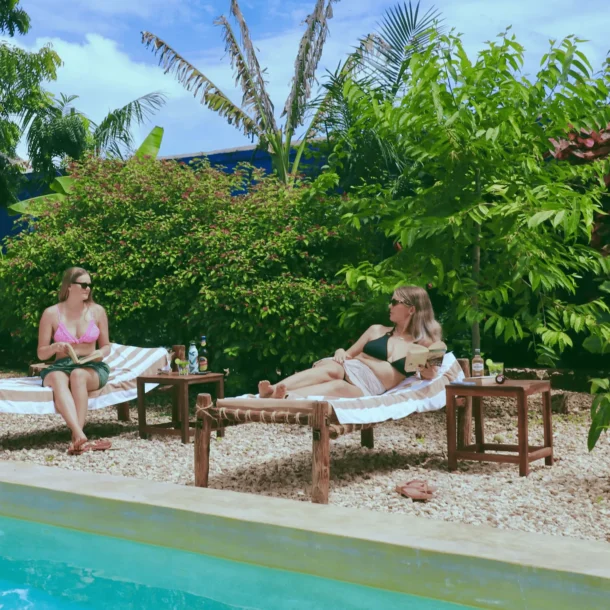
- On the beach: swimwear is fine.
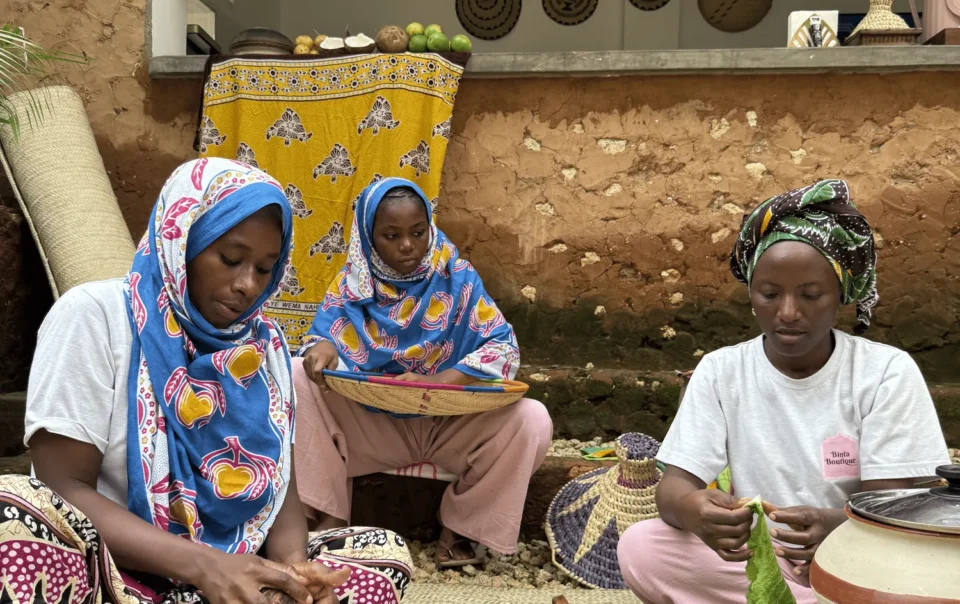
- In the village, shops and Stone Town: cover your shoulders and knees. A light shirt and a kanga or sarong wrapped as a skirt is perfect, and you’ll stay cooler too.
You’ll be shown more warmth when you dress respectfully, and local people really do notice.
Ask before you take photos
Zanzibar is incredibly photogenic, but people are not attractions. Always ask before photographing someone, especially women and children. A smile and naweza kupiga picha? (“may I take a photo?”) usually works. If the answer is hapana (no), accept it with a smile.
Use your right hand
Give, receive and eat with your right hand. The left is traditionally used for washing and is considered unclean.
Public affection
Holding hands is fine. Kissing and close cuddling in public is not part of local culture; save it for the beach at sunset or back at your room.
Ramadan
During the holy month of Ramadan (the dates change every year), Muslims fast from dawn to sunset. Many local restaurants close during the day, and the evenings come alive with iftar meals and family gatherings. Visitors are welcome; just avoid eating, drinking or smoking in public in the village during daylight hours. Hotels and guesthouses like ours still serve you as normal.
Pole pole: the Swahili rhythm
Things happen slowly here: pole pole. The bus leaves when it’s full, lunch takes as long as it takes, and that’s part of the charm. Let go of the clock and you’ll enjoy Zanzibar much more.
Kangas: wearing words
You’ll see women wearing kangas, colourful printed cloths with a Swahili proverb, the jina, printed along the border. Kangas are given as gifts and used to send messages: of love, of advice, sometimes of gossip. Buy one at the market, ask what the saying means, and you’ll have the best souvenir on the island.
The carved doors
Stone Town is famous for its heavy, carved wooden doors, with Indian-style brass studs and Arab-style geometric frames. A door was a family’s statement of status and faith. You’ll see their influence in the handcrafted details at Binta House too.
Bargaining, kindly
Bargaining is normal in markets. Start at about half, keep smiling, and remember that a few thousand shillings mean far more to the seller than to you.
Karibu, you’re home
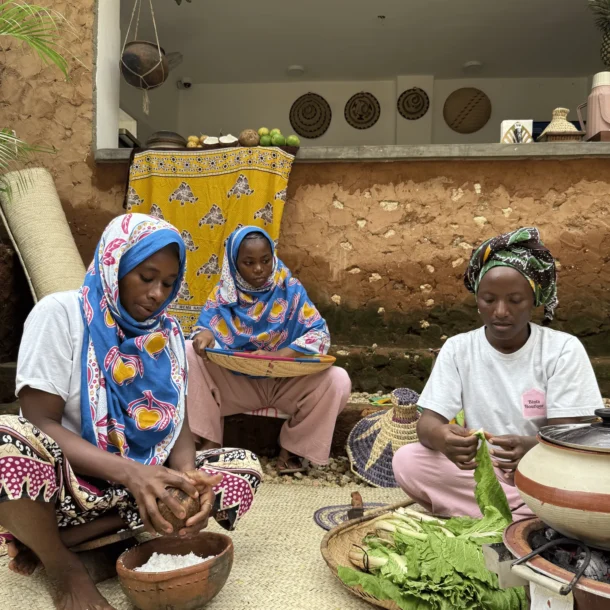
The most Swahili thing of all is hospitality: the instinct to welcome the guest. You’ll feel it from our dadas on your first morning. Respect the culture a little, and Zanzibar will welcome you back a lot.
Read next: Swahili for travellers: 25 words to learn · About Binta House
Experience Swahili hospitality at Binta House, Nungwi. See the rooms →